Today in NATCA History: A Look Back at the First NATCA Convention
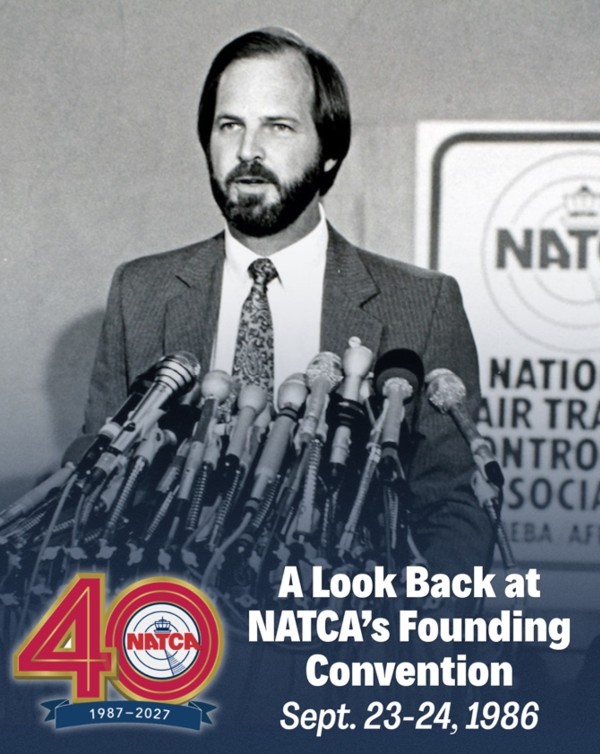
The first national convention of the National Air Traffic Controllers Association took place 40 years ago, Sept. 23-24, 1986, in Chicago. The convention represented far more than the launch of a new labor organization — it marked the reemergence of a unified voice for America’s air traffic controllers after one of the most turbulent periods in aviation labor history.
Five years earlier, more than 11,000 controllers were fired and barred from federal service after members of the Professional Air Traffic Controllers Organization (PATCO), then the bargaining representative for federal air traffic controllers, went on strike and refused to return to work. PATCO was subsequently decertified. In the years following the strike, the profession endured instability, low morale, staffing shortages, and fractured labor representation.
By 1986, a new generation of controllers and former PATCO members sought to organize a new union. Forty years ago today, 72 delegates from all nine FAA regions came together at the Chicago-O’Hare Ramada Hotel for an organizing convention. Delegates arrived not only to create a union but also to establish legitimacy for an entirely new organization in the eyes of controllers, the Federal Aviation Administration, and organized labor.
A central figure throughout the convention was NATCA founder John Thornton, who had worked alongside a small group of organizers to establish the association in 1986. Thornton and other leaders stressed that NATCA would pursue a professional relationship with the FAA while advocating aggressively for controller safety, staffing, training, and working conditions. The delegates’ vision was to create a union that controllers could trust and that federal agencies and lawmakers would take seriously. Today, the inaugural convention is remembered not simply as NATCA’s first meeting but also as the formal beginning of a new chapter for the American air traffic control profession — one rooted in resilience, solidarity, and a renewed commitment to protecting the safety and efficiency of the National Airspace System.
